| |
 |
 |
 |
 |
 |
 |
| |
 |
History
of SignWriting |
 |
Chapter 5
SignWriting Publications
Published in the USA
1981 - 1989
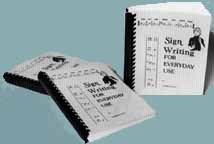
Spring, 1981
SignWriting For EveryDay
Use
This was the main reference
textbook for serious students
of SignWriting during the
1980's. Author: Valerie Sutton.
Illustrations by Jayne Gunderson,
Amy Blake and Ken Merchant.
450 pages. Spiral bind. Out-of-date.
No longer in print. This book
was replaced by a new textbook,
called Lessons
In SignWriting.
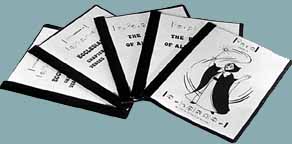
Spring, 1981
First SignWriting Literature
Series
This literature was "experimental"
since there had never been
a way to read and write American
Sign Language before. Over
the years, writers became
more skilled at recording
ASL properly. There is now
a Second
Literature Serieswritten
in ASL.
This first Literature Series,
back in 1981, was written
in Signed English or PSE.
It included 7 booklets:
1. How's That Again? by Paul
Menkis
Sign Language Poem Written
In SignWriting
2. Pledge of Allegiance
Written In SignWriting by
Margaret Oliver
3. A Poem For Deaf People
by Tina Samper
Sign Language Poem Written
In SignWriting
4. Ecclesiastis
Passage from the Bible Written
In SignWriting
5. Silent Night
Sign Language Song Written
In SignWriting
6. Goldilocks & the
Three Bears, Second Edition
Written in SignWriting by
Nancy Ellen Woo (now Nancy
Romero).
Other versions: First
Edition by Betty Beekman
at National Theater of the
Deaf.
The new Third Edition by
Darline Clark, written in
ASL in 1997, is now available.
7. Cinderella, First Edition
Written In SignWriting by
Nancy Ellen Woo (now Nancy
Romero). This was published
in the "SignWriting For
Everyday Use" textbook,
as well as in a separate booklet.
Illustrations by Jayne Gunderson.
No longer in print.
A Second Edition of
Cinderella, written by Darline
Clark in ASL in 1997, will
be available soon.
Summer, 1981
What Is SignWriting?
Four-page visual description
of SignWriting's uses. Cartoons
by Frank Allen Paul

Fall, 1981
"SignWriting Tote
Bags
Strong canvas, blue ink
on white. Two sizes. Design
is out-of-date. No longer
available.
Fall, 1981 First Issue
SignWriter
Newspaper
First newspaper written in
Sign Language by Nancy Ellen
Woo, sent to 41 countries.
1982 First Edition - 1993 Fourth
Edition
NTID Technical Signs Manual
Two: Reading Technical Sign
Diagrams
by Valerie Sutton and the NTID
team under the direction of
Dr. Frank Caccamise. Manual
Two teaches the SignWriting
symbols used in the Technical
Signs manuals.
1982 First Edition
NTID Technical Signs Manual
Three: Mathematics
by the NTID team under the direction
of Dr. Frank Caccamise. Manual
Three teaches signs used in
Mathematics. SignWriting symbols
are used in the illustrations.
1982 First Edition
NTID Technical Signs Manual
Four: Communications
by the NTID team under the direction
of Dr. Frank Caccamise. Manual
Four teaches signs used in Communications.
SignWriting symbols are used
in the illustrations.
1982
SignWriting For Research
Use
Tesxtbook by Valerie Sutton
teaching the way SignWriting
first developed at the University
of Copenhagen in the 1970's.
The writing is "very
detailed", geared to
researchers. Actually, SignWriting
has improved so much since
then, that today's writing
is just as detailed without
all of the complication.
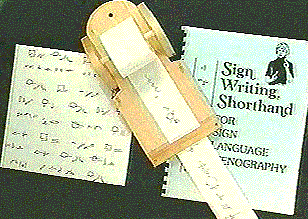
1982
SignWriting Shorthand For
Sign Language Stenography
Textbook by Valerie Sutton
teaching Shorthand. At that
time, a new profession called
"Sign Language Stenography"
was "under development".
Experiments were made with
recording signs at speed in
classrooms. Stenographers
learned how to write without
looking at their hands. This
book taught that system. Since
then, the Shorthand has been
adapted for use as a daily
handwriting for everyone.
1982
SignWriting Basic Teacher's
Certification Manual
This was a training manual for
educators to become qualified
SignWriting Instructors.
From 1981-1984, teachers received
certificates after completing
training. There were 31 instructors
who received certification in
the 1980's. The Teacher Certification
Program ceased in 1984.
1983 First Edition
NTID Technical Signs Manual
Five: Career Education
by Brenda Liebman Aron and the
NTID team under the direction
of Dr. Frank Caccamise. Manual
Five teaches signs used in Career
Education. SignWriting symbols
are used in the illustrations.
1983
Sutton's Sign-Symbol-Sequence
This was the first publication
describing and teaching Sutton's
system for looking up signs
by SignWriting symbols in
Sign Language dictionaries.
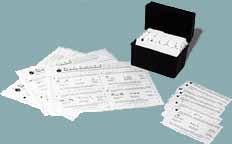
1983
SignWriting Card File Dictionary
ASL Dictionary on 3" by
5" cards. New cards were
sent to members monthly. This
forced students to learn how
to put the signs in Sign-Symbol-Sequence.
1983-1984
SignWriting Bilingual Dictionary
Project
The Danish Sign Language-American
Sign Language, American Sign
Language-Danish Sign Language
Dictionary
written in SignWriting. If
this dictionary had been completed,
it would truly have been historic.
There was no spoken language
in the dictionary. Everything
was written in two languages,
Danish Sign Language and American
Sign Language, including the
foreword and introduction.
The work was compiled by
Karen Albertsen, Annegrethe
Pedersen and others at the
Deaf Center For Total Communication
in Copenhagen, Denmark, collaborating
with Valerie Sutton and her
team in the USA. The work
was halted when it became
apparent that a typing program
for SignWriting was greatly
needed. Writing the whole
dictionary by hand with ink
pens and transfer sheets became
too much work.
The SignWriter Computer Program
could easily type the dictionary
now, and someday, with funding,
the DAC hopes to start the
bilingual dictionary project
again.
April, 1984
"SignWriting Updates"
Document reporting Deaf Americans
skilled SignWriting request
to write from the "Expressive
Viewpoint".
Spring-Summer, 1984, Final
Issue
SignWriter
Newspaper
Featured an article by Bernard
Bragg.
1985
NTID Technical Signs Manual
Six: English
by the NTID team under the direction
of Dr. Frank Caccamise. Manual
Six teaches signs used in teaching
English. SignWriting symbols
are used in the illustrations.
1985
NTID Technical Signs Manual
Seven: Religion
by the NTID team under the direction
of Dr. Frank Caccamise. Manual
Seven teaches signs used in
Religion. SignWriting symbols
are used in the illustrations.
August, 1985
Learn Signing With SignWriting
Video & Booklet
Bernard Bragg and Valerie Sutton
teach SignWriting to hearing
people who want to learn basic
signs. Also included Patty Duke,
William Schallert, Meredith
McRae and Stephanie Edwards.
Spring 1986
Four Ways Of Writing SignWriting
by Valerie Sutton. Detailed
SignWriting, SignWriting Printing,
Handwriting, & Shorthand.
1987
NTID Technical Signs Manual
Eight: Theater
by Keith Cagle and the NTID
team under the direction of
Dr. Frank Caccamise. Manual
Eight teaches signs used in
Theater. SignWriting symbols
are used in the illustrations.
Fall, 1987
Computers In Sign Language
Education
Paper by Richard Gleaves and
Karen van Hoek, discussing the
use of the SignWriter
Computer Program for teaching
language to Deaf people.
February, 1988
SignWriter // Computer Program
For The Apple //e and //c computers.
This was an historic little
program, because it was the
first time in history that SignWriting
could be typed. It was a true
"word processor" for
signs, including automatic word
wrap, Find and Replace, and
other features. Considering
the small amount of memory used
in those days, it typed signs
surprisingly well. This can
be attributed to the excellent
and clean design by programmer
Richard Gleaves. The keyboard
design and packaging design
was by Valerie Sutton. Richard
Gleaves wrote the Reference
Manual that came with the program,
which was packaged in a royal
blue folder with disks and keyboard
cards. This was the forerunner
to the SignWriter
Computer Program used today.
May, 1988
SignBank I Desk Accessory
for the Macintosh for "Word-Sign"
Dictionaries
programmed by Michael Ogawa,
this Desk Accessory, which is
a small "mini" program
on the Macintosh, inlcuded a
wonderful storage system for
signs in a dictionary, plus
specially designed SignWriting
Fonts, designed by Valerie Sutton.
SignBank I created "word-sign"
dictionaries. However, it was
not a true typing program like
the SignWriter Computer Program.
In SignBank, the fonts did not
rotate or flop the symbols.
To use the fonts, you had to
type a symbol in a Paint Program
and then change it manually,
dot by dot, and then copy the
whole sign and paste it into
the SignBank dictionary. Once
it was pasted in, then you could
print the dictionary which looked
quite nice. But SignWriter,
the "sign processor"
ended up being used more, because
the symbols are manipulated
for you. And SignWriter has
the same, if not better, dictionary
capabilities.
November, 1988
SignBank II Desk Accessory
for the Macintosh for "Sign-Word"
Dictionaries
programmed by Michael Ogawa,
designed by Valerie Sutton.
This was an "experiment"
to see how the computer could
"look-up" signs by
the Sign-Symbol-Sequence, instead
of looking signs up by English
words. The user had to know
what they were doing. Each symbol
category was represented in
a box. Before the sign was pasted
into the dictionary, the user
had to "establish"
what sequence of symbols he
wanted to use, when looking
the sign up in the dictionary.
He would click on the symbols
in the boxes, to establish the
"Sequence" and then
paste the sign into the dictionary.
SignBank II would then print
the dictionary in Sign-Symbol-Sequence.
This was an important program,
since it help everyone think
through different issues. The
new version of the SignWriter
Computer Program, version 5.0,
which is in progress, will include
a "Sign-Word" dictionary,
and that new program will be
based on what was learned from
SignBank II.
1988
NTID Technical Signs Manual
Nine: Social Work
by the NTID team under the direction
of Dr. Frank Caccamise. Manual
Nine teaches signs used in Social
Work. SignWriting symbols are
used in the illustrations.
Spring, 1989
SignWriter PC Computer Program, version 1.0
For The IBM PC & Compatibles.
Designed and programmed by Richard
Gleaves, with contributions
on the progamming of international
keyboards by Barry Demchak at
Torrey Pines Software. This
program was transported from
the older SignWriter // for
the Apple //e and //c. It was
then improved on the IBM PC.
More symbols, a Dictionary Manager
program, laser printing, and
many more new features were
added. It is the forerunner
to the SignWriter
Computer Program, version
4.3, which is in use today.
Spring, 1989, First Issue
SignWriter Newsletter Begins
Written by members of the
Deaf Action Committee. Mailed
to 7000 people.
|
|
Search
Google
|
|
|
|
|
Questions?
Write to:
Sutton@SignWriting.org
|
| |
| |
| |
| |
| |
| |
| |
| |
| |
| |
| |
| |
| |
| |
| |
| |
| |
| |
| |
| |
| |
| |
| |
| |
| |
| |
| |
| |
| |
| |
| |
| |
| |
| |
| |
| |
| |
| |
| |
|
|
|
|
|
|
|
|
| |
|
|
|
|
|
|
|
|
|
|
|
|
|
|
|
|
|
|
|
|
|
|
|
|
|
|
|
|
|
|
|
|
|
|
|
|
|
|
|
|
|
|
|
|
|
|
|

SignWriting
Symposium
Home |

SignWriting
Symposium
on YouTube |

Search by
Authors |

Search by
Categories
|

Search by
List of
Presentations
|
View 64
Presentation
Web Pages
including
papers, slides,
bios & videos.
See below: |

2014
Presentations |
2014
Presentation 1
SWORD Project
Research
Italy & France
Bianchini & Borgia |
2014
Presentation 2
Wöhrmann's
SpeechWriting
Education, Germany
Stefan Wöhrmann |
2014
Presentation 3
SW Handwriting
Write SW by Hand
Education, USA
Adam Frost |
2014
Presentation 4
SWift Digital
Editor, Software,
Italy & France
Borgia, Bianchini
& Marsico |
2014
Presentation 5
Deaf Child Literacy
Research, Brazil
Marianne Stumpf |
2014
Presentation 6
Deaf Literacy
with SignWriting
Education, Paraguay
Mirta Barreto |
2014
Presentation 7
New Testament
in Written ASL
Literature, USA
Nancy Romero |
2014
Presentation 8
Writing 48 Articles
in ASL Wikipedia
Literature, USA
Nancy Romero |
2014
Presentation 9
A Decade of
Teaching ASL
using SignWriting
Education, USA
Natasha Westland |
2014
Presentation 10
Ordering Signs
in Dictionaries
Education, USA
Charles Butler Neto |
2014
Presentation 11
SignPuddle
Standard
Software, USA
Steve Slevinski |
2014
Presentation 12
DELEGS-Editor
in Classroom
Education,
Germany
Stefan Wöhrmann |
2014
Presentation 13
SignWriter Studio
Software, Honduras
Jonathan Duncan |
2014
Presentation 14
Alternative
ISWA 2010 Fonts
Software, Honduras
Jonathan Duncan |
2014
Presentation 15
SignWriting in Deaf
Education, Tunisia
Balti, Bahri & Laajili |
2014
Presentation 16
Deaf Communication
Education, Brazil
Faulstich, Júnior
& Patrícia Santos |
2014
Presentation 17
SignWriting Teachers
Education, Brazil
Barreto, Souza,
Nascimento & Coelho |
2014
Presentation 18
Deaf Perspectives
Education, Brazil
Barreto, Souza,
Nascimento & Coelho |
2014
Presentation 19
TrueType in Graphite
Software, USA
Steve Slevinski
|
2014
Presentation 20
Sign Animating
Education, Canada
André Lemyre |
2014
Presentation 21
SignWriting App
Software, USA
Jake Chasan |
2014
Presentation 22
Children's Books
Literature, Portugal
Rafa Cota Silva |
2014
Presentation 23
TuniSigner Avatar
Software, Tunisia
Bouzid & Jemni |
2014
Presentation 24
Deaf Ed in Brazil
Education, Brazil
Stumpf & Barreto |
2014
Presentation 25
Reading SignWriting
Education, Brazil
Débora Wanderley |
2014
Presentation 26
SW Online Course
Education, Brazil
Barreto, Pereira
& Barbosa |
2014
Presentation 27
Film Online Course
Education, Brazil
Barreto & Goulart |
2014
Presentation 28
Language Analysis
Research USA
Erika Hoffmann |
2014
Presentation 29
SW in Deaf Schools
Education, USA
Denny Voreck |
2014
Presentation 30
SignWriting App
Education, USA
Elena Eroshkin |
2014
Presentation 31
Digital SW Texts
Software, USA
Steve Slevinski |
2014
Presentation 32
SW & Phonology
Research, Brazil
Costa & Barreto |
2014
Presentation 33
SW-OGR
Software, Italy
Borgia & Marsico |
2014
Presentation 34
SignWriting in
Catholic Liturgy
Education, Slovenia
Edi Strouhal |
2014
Presentation 35
Escrita de Sinais
Education, Brazil
Barreto & Barreto |
2014
Presentation 36
SW Terminolgy
Research, Brazil
Lima & Barreto |
2014
Presentation 37
SW Translation
Research, Brazil
Barreto & Oliveira |
2014
Presentation 38
SignWriting in
Music Scores
Literature, USA
Ron Shalom |
2014
Presentation 39
Writing Maltese
Sign Language
Research, Malta
Maria Galea |
2014
Presentation 40
40 Years Writing
Sign Languages:
1974-2014
Research, USA
Valerie Sutton |

2015
Presentations |
2015
Presentation 41
Javascript Keyboard
Software, Canada
Yair Rand |
2015
Presentation 42
Teacher's Attitudes
SW in Education
Saudi Arabia
AbuShaira, Mahfooz |
2015
Presentation 43
SignWriting Stack
Software, USA
Steve Slevinski |
2015
Presentation 44
DELEGS-Editor
Education, Germany
Stefan Wöhrmann |
2015
Presentation 45
SignWriting
Electronic
Flashcards
Education, Canada
André Lemyre |
2015
Presentation 46
Reading SignWriting
Research, Brazil
Marcos Klüber Kogut |
2015
Presentation 47
SignWriting in Classroom
Education, Portugal
Rafa Cota Silva |
2015
Presentation 48
SignWriting
Journal System
Software, Brazil
Brito, Shintaku,
Ramos & Nascimento |
2015
Presentation 49
SignMaker 2015
Software, USA
Steve Slevinski |
2015
Presentation 50
Nicaraguan
Sign Language
Grammar
Education,Nicaragua
James Shepard-Kegl |
2015
Presentation 51
SignWriting Font
Research, Germany
Lentföhr, Nitschke
& Rutrecht |
2015
Presentation 52
MemoSign Game
Software, Tunisia
Bouzid, Khenissi |

2016
Presentations |
2016
Presentation 53
Home For
Deaf Children
Education, Peru
Kristina Tworek |
2016
Presentation 54
SignTyp Database
Research, USA
Rachel Channon |
2016
Presentation 55
FSW Formal
SignWriting
Software, USA
Steve Slevinski |
2016
Presentation 56
SignWriting in
Tunisian Deaf
Education, Tunisia
Laajili & Balti |
2016
Presentation 57
Parallel Corpora
Software, Brazil
Alex M. Becker |
2016
Presentation 58
Deaf Writing Skills
Education, Portugal
Jorge Manuel Pinto |
2016
Presentation 59
Bilingual Deaf
Education, Brazil
Almeida & Júnior |
2016
Presentation 60
Bilingual Deaf
Education, Brazil
Daniele Bózoli |
2016
Presentation 61
SignWriting
in Unicode
Software, USA
Steve Slevinski |
2016
Presentation 62
SignPuddle 3.0
Software, USA
Steve Slevinski |
2016
Presentation 63
Peru Sign Dict
Research, Peru
Miguel Mondoñedo |
2016
Presentation 64
Sign Wikipedias
Literature, USA
Valerie Sutton
ASL Presentation by
Adam Frost, Jason
Nesmith, Holly Sharer
& the CODA Brothers
Plus special video on
Tunisian Sign Wikipedia
by Mohamed Ali Balti |
SignWriting
Symposium
Home |
| |
2016
SignWriting
Publications |
SignWriting
Basics Instruction
Manual |
Lessons in
SignWriting
Textbook |
ASL Hand
Symbols Manual |
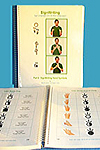
SignWriting
Hand Symbols
For ISWA 2010 |
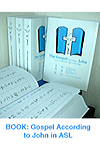
Gospel According
To John in ASL
on Amazon.com |
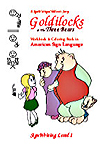
Goldilocks in
ASL, Workbook
& Coloring Book
|
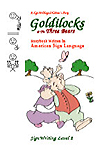
Goldilocks in
ASL, Basic
Storybook |
Snow White in
ASL, Workbook
& Coloring Book |
|


